Why Most Machine Shops Underprice CNC Machining and Fabrication Jobs
Most machine shop owners do not believe they are underpricing work.
Quotes are competitive. Machines are busy. Customers keep sending RFQs. Revenue is growing. On the surface, everything looks right.
Yet margins feel thinner than they should. Cash flow is tight despite full schedules. Equipment runs hard, but profitability never quite matches the effort.
Across CNC machine shops of all sizes, experienced owners eventually reach the same uncomfortable conclusion: pricing never caught up with how the business actually operates.
This is not an entry‑level mistake. It is a structural problem that appears after launch—usually as volume increases, job complexity grows, and operational risk quietly expands.
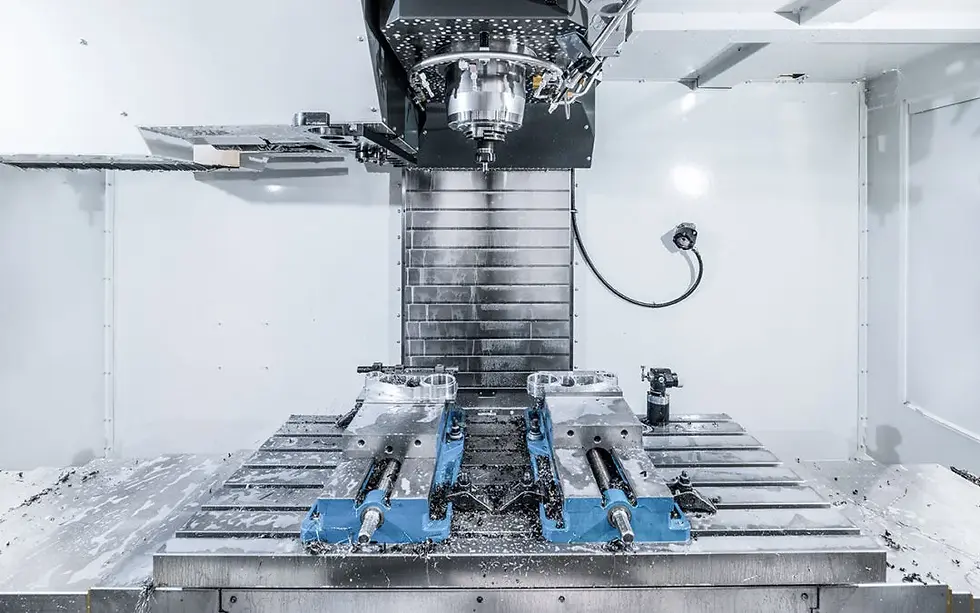
This article explains why most machine shops underprice CNC machining and fabrication jobs, where margin erosion actually occurs, how growth decisions amplify pricing mistakes, and why risk exposure and insurance coverage must evolve alongside pricing discipline.
Early Pricing Models Are Built on False Assumptions
Most shops establish pricing when annual revenue is between $150,000 and $300,000.
At that stage:
The owner does most quoting
Setup time is mentally discounted
Programming is absorbed
Rework is treated as part of learning
These assumptions work because volume is low and the owner personally absorbs inefficiency.
Once revenue crosses $400,000–$500,000, the same assumptions silently break pricing accuracy.
Setup time increases. Part mix becomes less predictable. Programming complexity grows. Yet the pricing model often stays frozen in its early form.
Underpricing CNC machining or fabrication jobs? Make sure your insurance isn’t holding you back.

Setup and Changeover Are the Biggest Pricing Failures
Setup is one of the most consistently underpriced elements in CNC machining and fabrication.
Common setup pricing errors include:
Assuming repeatability where none exists
Underestimating fixture and fixturing variation
Ignoring tool touch‑off, probing, and validation
Treating first‑article checks as negligible
As job volume increases, frequent setups eat available capacity. Shops then mistake setup congestion for insufficient machines, when the real issue is that setup time was never priced accurately.
This is especially visible in short‑run, high‑mix environments.
Fabrication Jobs Hide Cost in Plain Sight
Fabrication work often looks profitable because piece prices seem strong.
In reality, fabrication underpricing often comes from:
Material handling and staging time
Fit‑up and tack labor variability
Weld distortion correction
Cleanup, grinding, and finishing labor
Fabrication margins evaporate when pricing assumes ideal conditions instead of real shop conditions.
At $500,000+ in revenue, the cumulative effect of underpricing fabrication work limits cash flow and increases pressure to chase volume over margin.
“Busy Machines” Do Not Equal Profitable Machines
Many shop owners equate utilization with profitability.
At $600,000–$900,000 in revenue, shops often report:
High spindle time
Increasing overtime
Strong sales activity
Yet profit remains inconsistent.
This happens because pricing models often ignore:
Non‑cutting labor
Machine downtime penalties
Opportunity cost of machine time spent on low‑margin work
Machines can run all day while draining value.
Pricing Errors Force Premature Expansion Decisions
One of the most common mistakes experienced machinists admit later is buying equipment to compensate for underpricing.
When margins compress, owners assume they need:
More machines
More volume
More customers
In reality, the pricing model failed first.
At $750,000 to $1M, shops that have not corrected pricing often experience:
Constant quoting pressure
High equipment utilization
Minimal financial cushion
Buying equipment under these conditions amplifies risk instead of solving margin issues.
Cost Reduction Versus Cost Control in Machine Shops
Underpricing pushes shop owners toward the wrong type of discipline.
Instead of cost control, many pursue cost reduction.
That often means:
Delaying preventative maintenance
Extending tool life past optimal points
Accepting marginal jobs to keep spindles turning
Running lean staffing under pressure
These moves protect short‑term cash flow while increasing exposure to breakdowns, scrap, and injuries.
Cost control supports reliability. Cheap production creates fragility.
Underpricing Quietly Increases Risk Exposure
As CNC and fabrication volume increases, exposure increases whether pricing accounts for it or not.
Growing shops face:
Higher payroll and workers’ compensation exposure
Increased material value on the floor
More customer‑owned parts
Higher frequency of shipments and handling
Risk grows with activity, not just headcount.
Pricing that fails to account for risk contributes to fragility, even when insurance coverage remains unchanged.
Where Machine Shops Become Underinsured
Underinsurance is rarely intentional.
It happens when:
Payroll increases faster than workers’ comp classifications are updated
Customer material values grow without coverage review
Finished goods inventory expands
Contracts demand higher limits than the shop carries
By $800,000–$1.2M, many machine shops are operating with insurance coverage designed for significantly smaller operations.
Insurance should reflect how the shop runs today. It should be reviewed deliberately, not reactively.
Competitive Quoting Masks Structural Problems
Many shop owners blame underpricing on competition.
RFQs are aggressive. Customers compare shops line‑by‑line. The lowest price wins attention.
What is not visible:
Which shop is absorbing risk internally
Who is deferring maintenance or coverage
Who is underinsured
Winning jobs at unsustainable pricing does not build a scalable operation. It postpones structural failure.
Pricing Discipline Unlocks Predictable Growth
Shops that stabilize margins before scaling do not quote faster. They quote smarter.
That typically involves:
Separating setup from run time
Pricing complexity explicitly
Factoring in rework probability
Understanding real machine hour value
Pricing clarity gives shop owners leverage. Without it, growth only magnifies strain.
Final Takeaway: Underpricing Is a Structural Issue, Not a Sales Issue
Most machine shops underprice CNC machining and fabrication work because pricing never evolved with operations.
Underpricing persists when:
Early assumptions remain unchallenged
Setup and complexity are undervalued
Fabrication variability is ignored
Risk exposure is absorbed rather than priced
Growth outpaces financial recalibration
To protect margins, machine shop owners must:
Rebuild pricing around current throughput
Price setup, complexity, and risk honestly
Choose cost control over cost cutting
Recognize growth ceilings before expansion decisions
Align insurance coverage with actual operations
Profitability does not come from more quotes. It comes from pricing accuracy and structural discipline.
Protect Your Machine Shop as Job Volume and Value Increase
As your machine shop takes on:
Higher‑value CNC machining jobs
Complex fabrication work
Larger customer‑owned material lots
Increased payroll and operating hours
Bigger contracts with tighter requirements
Your exposure increases accordingly.
Wexford Insurance helps machine shops protect:
Machinists, welders, and shop personnel (workers’ compensation)
CNC machines, tooling, and fixtures (equipment and inland marine coverage)
Customer‑owned materials and finished goods
Product, premises, and operations liability
Contract‑driven insurance requirements and higher limits
Request a fast, no‑pressure, no‑obligation business insurance quote from Wexford Insurance.
Control hidden margin leaks. Strengthen protection. Scale your machine shop with confidence.