What Does General Liability Insurance for Laundromat Business Cover?
Owning a laundromat means more than keeping machines running—it means managing a constant flow of people, water, and moving equipment. In our experience at Wexford Insurance, it often only takes a small, everyday incident—like a puddle near a washer or a tipped laundry cart—to turn into a liability claim.
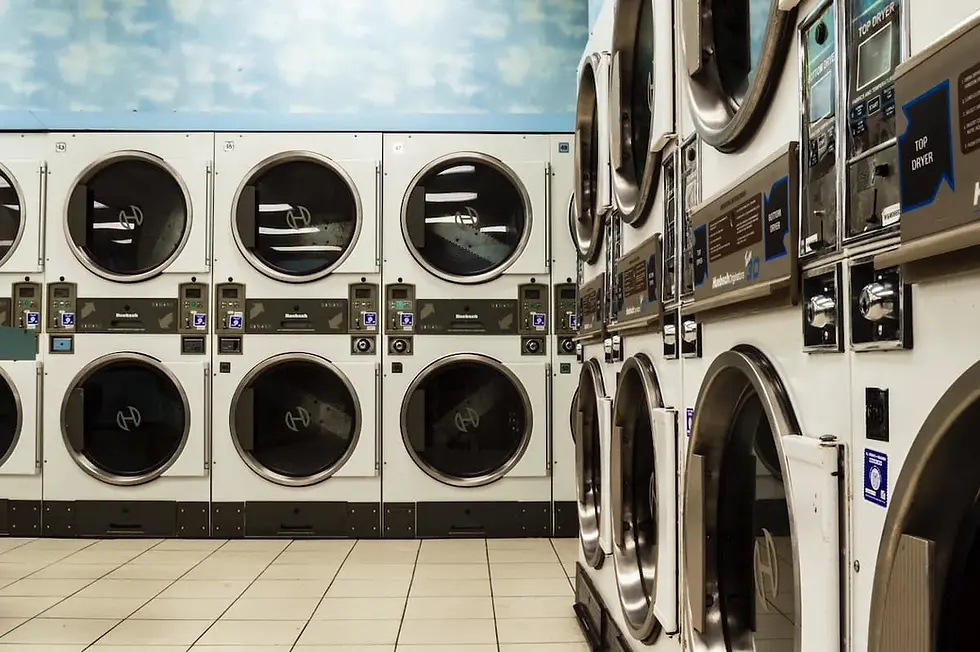
If you’re researching general liability insurance for a laundromat business, you’re asking the right question. This coverage is the foundation of most laundromat insurance policies and plays a critical role in protecting your business from the types of incidents we see happen every week in this industry.
Nate Jones, CPCU, ARM, CLCS, and AU, founder of Wexford Insurance, puts it simply: “Laundromats are one of those businesses where the risks aren’t dramatic—but they’re constant. General liability is what keeps a routine day from turning into a financial problem.”
What Is General Liability Insurance for a Laundromat Business?
General liability insurance protects your laundromat if your business is found responsible for third-party bodily injury, property damage, or legal expenses.
In a laundromat, those risks are elevated. You have:
Wet floors
High customer turnover
Heavy, continuously running equipment
Limited supervision in self-service environments
At Wexford Insurance, we’ve worked with laundromat owners who assumed small issues wouldn’t turn into claims—until they did. General liability coverage exists specifically for these everyday exposures.
Average Cost of Laundromat Insurance
The cost of insurance for a laundromat depends on size, location, revenue, and how your business operates (self-serve vs. attended, wash-and-fold services, etc.). Below are realistic estimated ranges based on what we see in the marketplace.
$500 – $1,500 per year for smaller laundromats
$1,500 – $3,500+ for higher-traffic locations
Most laundromats carry $1M per occurrence / $2M aggregate limits. At Wexford Insurance, this is typically the minimum Nate Jones CPCU, ARM, CLCS, and AU, recommends due to customer volume and slip-and-fall exposure.
(A combination of general liability + commercial property insurance)
$1,200 – $4,500 annually depending on equipment value
A BOP is often the most efficient way to insure both your liability and your building or contents.
$800 – $3,000+ annually depending on payroll
If you have attendants, cleaners, or maintenance staff, this is critical. Laundry-related lifting injuries are more common than many owners expect.
Commercial Property Insurance (Standalone)
$1,000 – $5,000+ depending on equipment and building value
Laundromats tend to have high property exposure due to expensive washers, dryers, and plumbing systems.
Umbrella Insurance
$500 – $1,500 annually for $1M in additional coverage
Adds extra protection above your general liability limits. Nate Jones CPCU, ARM, CLCS, and AU, often recommends this for higher-traffic laundromats or locations open 24/7.
What Does General Liability Insurance Cover?
Customer Injuries
This is the most common claim category we see for laundromats.
Examples include:
A customer slips on water near a washer
Someone trips over a laundry basket or cart
A wet floor near folding tables causes a fall
Learn More: Fall Prevention Training
In Nate Jones’s CPCU, ARM, CLCS, and AU, experience as a former underwriting manager, slip-and-fall claims are among the most frequent and most contested liability claims in small retail businesses.
If your laundromat is found responsible, your policy can help cover:
Medical bills
Legal defense costs
Settlements or judgments
Property Damage to Others
General liability also covers damage to property owned by others.
Examples:
A leaking machine damages a customer’s clothing
Water overflow affects an adjacent tenant
Plumbing issues spread into neighboring spaces
At Wexford Insurance, we’ve seen situations where a minor overflow in a multi-tenant strip center led to multiple parties filing claims. These are situations where liability coverage
quickly proves its value.
Legal and Defense Costs
Even small incidents can escalate into lawsuits. General liability policies typically cover:
Attorney fees
Court costs
Investigation expenses
Settlements
Nate Jones, CPCU, ARM, CLCS, and AU, often reminds clients: “The legal costs alone—not even the claim payout is what catch most business owners off guard.”
Advertising and Personal Injury
While less common in laundromats, this coverage can include:
Libel or slander claims
Copyright or advertising disputes
For example, using marketing materials or signage that unintentionally violates copyright could trigger this portion of your policy.
Real-World Laundromat Example
At Wexford Insurance, we recently worked with a laundromat owner who experienced a weekend rush during peak hours. A washer had a minor seal issue, causing water to slowly pool in front of the unit.
A customer entered, didn't notice the water, and slipped.
The situation resulted in:
Immediate medical expenses
A demand letter from an attorney
A potential liability claim
Because the owner had proper general liability insurance, the policy responded and handled the legal process. Without it, the owner would have been paying out of pocket.
What General Liability Does NOT Cover
It’s just as important to understand what this policy doesn’t include.
General liability typically does NOT cover:
Damage to your own machines or building
Equipment breakdown
Employee injuries (covered by workers’ comp)
Business vehicle accidents
Flooding or sewer backup (requires separate policies in many cases)
This is why most laundromat owners need a complete insurance strategy, not just one policy.

What Factors Affect Cost for Laundromat Insurance?
Insurance pricing for laundromats isn’t random. Underwriters evaluate several specific risk factors:
Foot traffic volume — Higher traffic = higher liability exposure
Hours of operation — 24/7 laundromats typically carry more risk
Maintenance practices — Poorly maintained equipment increases claims
Type of services offered — Wash-and-fold adds employee exposure
Age and condition of equipment — Older machines can lead to leaks or failures
Claims history — Past incidents significantly impact pricing
At Wexford Insurance, we’ve found that laundromat owners who proactively maintain equipment and document cleaning procedures often qualify for better pricing.
Additional Coverages to Consider
General liability is just one part of the puzzle. Most laundromat owners should consider:
Commercial Property Insurance — Protects washers, dryers, and the building
Equipment Breakdown Coverage — Covers internal mechanical failure
Workers Compensation Insurance — Required if you have employees
Commercial Auto Insurance — For supply or service vehicles
Cyber Insurance — For laundromats using digital payment systems
Bundling coverage through a Business Owner’s Policy (BOP) is often the most cost-effective route.
How to Lower Your Laundromat Insurance Costs
At Wexford Insurance, we help laundromat owners reduce premiums without sacrificing protection. Here are practical steps:
Implement daily inspection routines for leaks and hazards
Use non-slip flooring or mats near machines
Maintain detailed service logs for all equipment
Install security cameras to help defend liability claims
Train employees on hazard awareness and cleanup procedures
Bundle policies into a BOP for discounts
Work with an independent agency that can shop multiple carriers
One of the most common mistakes Nate Jones CPCU, ARM, CLCS, and AU, sees laundromat owners make is focusing only on price instead of coverage details. That often leads to gaps that cost more later.
Frequently Asked Questions
Is general liability insurance required for a laundromat?
It’s typically not required by law, but most landlords and lenders require it. If you're leasing space, you’ll almost certainly need proof of coverage.
How much general liability coverage should I carry?
Most laundromats carry at least $1M/$2M limits, but higher-traffic locations may need umbrella coverage for additional protection.
Does general liability cover damaged customer clothing?
Sometimes, yes—if the damage is caused by negligence (like a leaking machine). However, mechanical issues may fall under other policies.
Can I bundle laundromat insurance into one policy?
Yes. A Business Owner’s Policy (BOP) is the most common and cost-effective way to combine liability and property coverage.
How fast can I get a laundromat insurance quote?
In most cases, we can provide quotes within 24–48 hours once we have details like square footage, number of machines, and services offered.
Why Laundromat Owners Choose Wexford Insurance
Wexford Insurance isn’t a call center or a one-carrier agency. We’re an independent agency, which means we work for you—not the insurance company.
We represent multiple carriers and compare options to find the best coverage for your laundromat at the most competitive price.
Nate Jones, CPCU, ARM, CLCS, AU, leads our team with a background in underwriting and risk management. He studied Insurance and Risk Management at Indiana State University and has operated on the carrier side—so he understands how policies are built, priced, and evaluated.
At Wexford Insurance, we have seen firsthand that laundromat owners benefit most from tailored policies—not one-size-fits-all solutions.
Get a Laundromat Insurance Quote Today
If you run a laundromat, protecting your business starts with the right liability coverage—but it shouldn’t stop there. We’ll help you build a complete, customized plan that fits your operation.
Wexford Insurance Address: 107 N State Road 135, STE 304, Greenwood, IN 46142
Call 317-942-0549 or visit www.wexfordins.com. We will compare multiple carriers and help you secure the right protection at the best possible price.