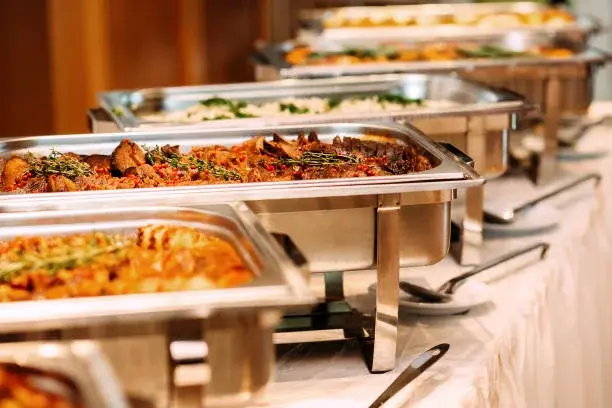
How to Scale a Catering Business From Small Events to Large Weddings
Most catering companies reach a point where small events — corporate lunches, private dinners, backyard parties — no longer provide the revenue or margin needed to grow. Owners begin eyeing the next level: large weddings, multi‑course plated dinners, high‑guest‑count buffets, and full‑service event management.
But scaling into wedding catering isn’t simply “more food for more people.” It is a fundamental shift in operations, risk exposure, equipment requirements, staffing structure, and pricing strategy.

This guide is written for operators already generating meaningful revenue (typically $250K–$750K per year) and now feeling:
Overwhelmed by logistics
Pressured by low-margin small events
Unsure how to price large weddings profitably
Bottlenecked by kitchen capacity
Short on reliable labor
Uncertain when to invest in equipment
Worried about liability as they take on bigger venues and guest counts
Below is how seasoned catering operators make the leap from small event work to high‑ticket, high‑expectation wedding catering — without sacrificing profit or exposing themselves to avoidable risk.
1. Small Events Have a Natural Revenue Ceiling
Most small-event caterers (25–75 guests) hit a predictable glass ceiling around $250K–$450K per year, because:
The owner handles too many roles
Each event requires the same overhead regardless of size
Event frequency caps labor availability
Customers are highly price-sensitive
Menu customization is excessive
Kitchen space limits how many events you can execute per day
Delivery and setup time reduce total production capacity
Put simply: small events take nearly the same operational energy as big ones — but produce a fraction of the revenue.
When operators hit this threshold, the shift to large weddings is the only sustainable path to higher revenue.
2. Weddings Allow Larger Revenue per Event — But Add Complexity
A single well‑executed wedding can equal:
3–6 small private events, or
A full week of corporate drop‑offs
Revenue per wedding commonly ranges from $8,000 to $40,000+, depending on the service style.
But weddings bring complexity requiring new systems:
Precise timelines
Coordinated service flow
Venue logistics
Equipment transport
Backup plans for staff and equipment
Higher food quality expectations
Tight guest dietary management
Coordination with planners, photographers, DJs, and venue staff
The complexity is manageable — if you prepare for it properly.
3. The Biggest Scaling Mistake: Using Small‑Event Pricing for Large Weddings
This is where most caterers lose money.
Charging per‑plate without accounting for timeline risk
Underpricing labor, especially servers and bartenders
Not charging for equipment transport
Including rentals (china, glassware, chairs, tents) without markup
Ignoring venue access limitations
Not pricing walk-in refrigeration or hot-holding time
Forgetting insurance requirements for alcohol service
Large weddings require a pricing structure built for:
Logistics
Risk
Setup time
Breakdown time
Transportation
Backup staff
Admin coordination
Insurance coverage
If you do not price these in, your margins collapse.
A well-run catering company often targets 20–30% net margin on weddings.Poorly priced weddings can run negative margins without the operator realizing it.
4. Equipment: Renting Works for Small Events — But Owning Unlocks Scale
When doing small events, renting equipment is fine.
But wedding-scale catering requires equipment availability on demand, not subject to rental shortages during peak season.
Equipment that becomes essential as you scale:
Hot boxes
Cambros
Insulated beverage carriers
Sheet pan racks
Combi ovens
Induction burners
Refrigerated vans
Event tents, if applicable
Service ware (buffet displays, chafers, plating equipment)
Backup inverters or generators
Renting becomes a margin drain once you're doing:
2+ weddings per weekend
50+ weddings per year
150+ guests per event consistently
At that volume, owning equipment reduces:
Delivery delays
Rental shortages
Damage fees
Wasteful logistics
And increases:
Production efficiency
Event consistency
Profit per event
But buying equipment also increases risk exposure, especially when transporting high-value gear.
That’s where proper commercial auto and Inland Marine coverage matter — because one accident can destroy an entire weekend’s events.
5. Labor Becomes the Primary Scaling Constraint
Wedding catering requires:
More staff
Better-trained staff
Earlier arrival
Longer shifts
Higher skill level
More clarity in roles
Common labor-related scaling problems include:
A. Overusing the same small-event staff
Small-event staff often cannot handle large weddings. You need:
Captains
Lead servers
Runners
Bartenders
Dish + breakdown crew
Logistics/transport staff
B. Not paying for training
Weddings require standardized flow:
Cocktail hour
Dinner service
Cake service
Bar lines
Late-night snacks
Cleanup protocol
Training is not optional — it is a margin preservation tool.
C. No scheduling system
Weddings often conflict on weekends. Without:
Staff rotation
Clear availability
Backup lists
the business caps out quickly.
6. Hidden Risks Explode as You Move Into Wedding Catering
Growing from small events into weddings triggers new exposures many caterers overlook.
A. Larger guest counts increase food safety risk
More volume = more:
Prep steps
Transport time
Holding time
Plating complexity
One mistake affects hundreds, not dozens — and can bankrupt an uninsured business.
B. New venues require additional insured documentation
Wedding venues often require:
Higher general liability limits
Waivers
Liquor liability
Auto coverage for delivery vans
C. Alcohol dramatically increases liability risk
If you provide, serve, or transport alcohol, your exposure increases tenfold.
D. More equipment = more transport risk
Most caterers don’t realize that equipment in a van is not automatically covered unless scheduled properly.
E. Additional staff increases workers’ comp exposure
Especially for:
Lifting
Carrying hot trays
On-site hazards
Long shifts
These risks often appear only after a claim — and by then, it’s too late.
7. Why Most Catering Companies Get Stuck at the $500K–$800K Level
This is the most common growth ceiling for established caterers attempting weddings.
Reasons include:
Owner still manages every event personally
Pricing not aligned with true labor and logistics cost
Equipment rented instead of owned
Kitchen capacity maxed out
No dedicated logistics/transport team
Inconsistent staff training
Underestimating insurance requirements
Accepting every job instead of focusing on high‑margin wedding niches
Breaking past this level requires building a wedding-specific operating model, not just doing bigger events.
8. How to Successfully Scale Into Weddings (Without Losing Margin)
1. Create a wedding-specific pricing structure
Include:
Setup/breakdown
Staffing tiers
Equipment transport
On-site time minimums
Plating complexity
Menu customization
Venue logistic charges
2. Increase kitchen capacity before scaling
Often requires:
Additional refrigeration
Prep tables
A double‑stack oven
Walk-in cooler expansion
More storage
3. Build a trained wedding team
Do not rely on freelancers for core roles.
4. Own key equipment
Especially hot holding and refrigeration.
5. Create a logistics plan
Including:
Van load-out lists
On-site diagrams
Pre-event checklists
Timing flowcharts
6. Align insurance with growth
Before — not after — scaling.
Insurance Integration: Scaling Weddings Increases Liability, Auto, and Equipment Exposure
Your insurance should reflect your operational reality.
As you scale:
More equipment = more Inland Marine coverage
More staff = higher workers’ comp needs
More venues = higher general liability limits
More alcohol = liquor liability requirements
More vans = updated commercial auto coverage
Bigger weddings = greater claim severity
Many catering companies realize they are underinsured only after a major incident, such as:
Foodborne illness
Van accident damaging equipment
Staff injury during setup
Guest damage claim
Venue property damage
Scaling safely means updating coverage proactively.
Final Takeaway: Scaling Into Weddings Is a Systems Shift, Not a Menu Shift
Small-event caterers grow revenue slowly.Wedding caterers grow revenue in leaps.
But the leap requires:
Better pricing
Stronger staffing
More equipment
Improved logistics
Greater risk protection
Mature leadership systems
If you build these foundations early, scaling from small events to large weddings becomes predictable and profitable — not chaotic.
Protect Your Catering Business as You Scale Into Larger Events and Weddings
Wexford Insurance helps established catering companies protect the equipment, staff, vehicles, and liability exposures that grow rapidly with wedding-scale operations.

👉 Request a tailored catering business insurance quote from Wexford Insurance.
Protect your growth — and the reputation you’ve worked hard to build.