Is a Catering Business Profitable? Event Margins Explained in 2026
If you're thinking about starting a catering company, you've probably heard two very different stories. One says catering is a highly profitable business with large event budgets. The other warns that food costs, labor, and last-minute event changes can quickly eat away profits.

The truth falls somewhere in the middle. A catering business can absolutely be profitable in 2026, but success depends on controlling costs, pricing events correctly, building reliable client relationships, and managing operations efficiently. Understanding the economics behind catering contracts is just as important as creating great food.
Is a Catering Business Profitable in 2026?
Yes, a catering business can be profitable in 2026 because businesses, wedding venues, nonprofits, schools, and private clients continue to host events that require food service. Many catering companies generate steady revenue through corporate catering, weddings, social events, and recurring contracts.
However, profitability varies significantly based on food costs, labor expenses, event type, competition, overhead, and management practices. There are no guaranteed earnings, and results depend heavily on execution and local market conditions.
Why Catering Continues to Be a Viable Business
Unlike restaurants that depend on daily customer traffic, caterers often work from booked events with known budgets and guest counts.
This allows business owners to plan around:
Scheduled events
Confirmed headcounts
Defined menus
Known staffing needs
Contracted revenue
Common catering opportunities include:
Weddings
Corporate events
Holiday parties
Fundraisers
School functions
Nonprofit galas
Private celebrations
Government events
Many caterers develop recurring relationships with venues, businesses, and event planners that lead to repeat bookings throughout the year.
Understanding Catering Business Economics
One thing that makes catering unique is that every event functions almost like a separate project.
Each event has its own:
Food costs
Labor needs
Equipment requirements
Delivery logistics
Setup responsibilities
Cleanup obligations
Profitability often comes down to how accurately these costs are estimated before the contract is signed.
Many successful caterers focus heavily on event costing because even a small pricing mistake can affect margins.
Where Catering Revenue Comes From
Most people assume caterers only make money from food.
In reality, many companies generate revenue from multiple services.
These can include:
Food service
Beverage service
Staffing
Rentals
Delivery fees
Setup fees
Event coordination
Specialty menu upgrades
Diversifying revenue streams may help strengthen profitability while improving customer satisfaction.
Typical Catering Profit Margins
One of the most common questions prospective owners ask is about catering profit margins.
The answer varies widely.
Many catering businesses target:
Gross profit margins often ranging from approximately 30% to 60%
Net profit margins frequently falling within the mid-single digits to low double digits
These are broad industry estimates only and should not be interpreted as guaranteed results.
Actual margins depend on:
Food costs
Labor productivity
Event size
Equipment expenses
Kitchen costs
Marketing spending
Client acquisition costs
Waste management
A catering company that controls costs effectively may outperform one with significantly higher revenue.
Weddings vs. Corporate Catering
Different event types often produce different financial outcomes.
Wedding Catering
Wedding catering can generate substantial revenue per event.
Advantages may include:
Larger guest counts
Premium menus
Higher overall event budgets
Challenges may include:
Greater client expectations
More planning time
Detailed coordination
Weekend scheduling demands
Corporate Catering
Many caterers appreciate corporate clients because they often provide recurring business.
Examples include:
Office lunches
Conferences
Training sessions
Company celebrations
Benefits may include:
Repeat customers
Predictable scheduling
Lower emotional pressure than weddings
Many profitable catering companies maintain a healthy mix of both wedding and corporate business.
The Costs That Determine Profitability
The catering industry can appear simple from the outside, but numerous expenses affect profit margins.
Food Costs
Food is one of the largest expenses.
Common costs include:
Meats
Produce
Dairy products
Beverages
Desserts
Disposable serving supplies
Unexpected price fluctuations can affect event profitability if contracts are not structured properly.
Labor Costs
Most catering businesses require staff for:
Food preparation
Transportation
Setup
Service
Cleanup
Labor expenses commonly include:
Wages
Payroll taxes
Overtime
Training
Benefits
As businesses grow, staffing becomes one of the most important areas to manage carefully.
Transportation and Delivery
Unlike traditional restaurants, caterers often bring operations directly to the customer.
Expenses may include:
Fuel
Vehicle maintenance
Delivery equipment
Commercial vehicles
Travel time
These costs are frequently overlooked by new business owners.
Equipment and Rentals
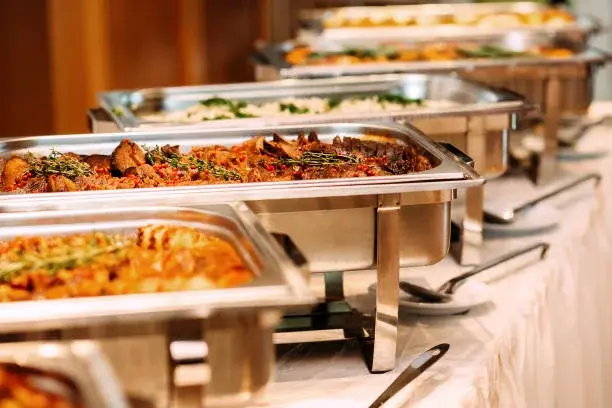
Catering often requires specialized equipment such as:
Chafing dishes
Serving equipment
Refrigeration units
Linens
Display equipment
Whether rented or owned, these items affect event profitability.
What Most People Get Wrong
The biggest misconception about catering profitability is that larger events automatically generate larger profits.
In reality, bigger events also create more complexity.
A 300-person event may require:
Additional staff
More equipment
Increased transportation
Greater food purchasing
More planning time
Meanwhile, a smaller, well-managed corporate event may produce stronger margins because it requires fewer resources and less coordination.
The most profitable catering businesses are not necessarily the ones serving the most guests. They're often the ones that understand their costs and choose the right events.

The Power of Repeat Clients
One major advantage of catering compared to some other service businesses is the ability to develop long-term relationships.
Reliable repeat customers may include:
Corporate offices
Event venues
Schools
Churches
Nonprofits
Property management companies
These relationships can reduce marketing expenses and create a more predictable revenue pipeline.
According to resources available through the U.S. Small Business Administration, repeat business and customer retention are often important factors in long-term small business stability and growth:
How Successful Caterers Improve Profit Margins
Many of the most profitable catering companies focus on systems rather than simply increasing bookings.
Standardize Menus
Offering streamlined menu options can help:
Simplify purchasing
Reduce waste
Improve consistency
Control labor costs
Improve Inventory Management
Food waste can quietly erode profits.
Tracking inventory carefully helps reduce unnecessary purchasing and spoilage.
Focus on Operational Efficiency
Successful caterers often improve margins by optimizing:
Kitchen workflows
Delivery schedules
Staffing plans
Event preparation processes
Small gains in efficiency can add up across dozens or hundreds of events.
Build Strategic Partnerships
Relationships with:
Event planners
Wedding venues
Conference centers
Corporate facilities
can create a steady stream of referrals without requiring large advertising budgets.
Licensing and Insurance Reality Check
Many aspiring caterers spend most of their time thinking about menus and marketing while overlooking compliance requirements.
Depending on your state and local jurisdiction, you may need:
Business licenses
Food service permits
Health department approvals
Sales tax registrations
Food handling certifications
Requirements vary by location and can change over time, so always verify current requirements with the appropriate local authorities.
Business owners can review food safety resources through the U.S. Food and Drug Administration at:
Insurance is another important consideration.
Many catering businesses carry:
Commercial property insurance
Equipment coverage
Umbrella liability insurance
For example, general liability insurance may help respond to covered claims involving third-party bodily injury or property damage. Commercial auto insurance may help protect vehicles used for deliveries and event transportation.
Many venues and corporate clients require proof of insurance before allowing caterers to operate on-site.
Because every catering operation is unique, business owners should discuss their specific needs with a licensed insurance professional.
Is Starting a Catering Business Worth It in 2026?
For many entrepreneurs, the answer is yes.
Catering offers several attractive advantages:
Diverse customer markets
Recurring corporate opportunities
Event-based revenue
Scalable operations
Referral-driven growth
However, profitability requires more than culinary talent.
Successful owners typically become skilled in:
Pricing
Event planning
Labor management
Customer service
Sales
Inventory control
Financial management
The catering businesses that perform best over time are often those that combine great food with strong systems and disciplined operations.
FAQ
Is a catering business profitable in 2026?
Yes. Many catering businesses remain profitable due to ongoing demand from weddings, corporate events, private parties, and community organizations. Actual results vary based on costs, pricing, and operational efficiency.
What are typical catering profit margins?
Many catering businesses target gross margins between approximately 30% and 60%, while net margins often fall within the mid-single digits to low double digits. Actual results vary by business.
What is the biggest expense for a catering company?
Food and labor are frequently the largest expenses. Transportation, equipment, rentals, and marketing can also significantly affect profitability.
Are weddings more profitable than corporate catering?
Not necessarily. Weddings may generate larger revenue per event, while corporate clients often provide recurring business and more predictable scheduling.
Do catering businesses need insurance?
Most catering businesses carry insurance to help protect against liability claims, vehicle-related risks, employee injuries, and property damage exposures. Specific needs depend on the operation and local requirements.
Ready to Protect Your Catering Business?
Whether you're launching a small catering company or expanding an established operation, the right insurance can help protect the business you've worked hard to build. Proper coverage may help satisfy venue requirements, protect business assets, and support long-term growth.
When you're ready to explore your options, request a free quote from Wexford Insurance at https://www.wexfordins.com/business-quote. Our team works with service businesses nationwide and can help you evaluate coverage options that fit your catering operation.