
How Much Does Multifamily Property Insurance Cost in Wisconsin?
Owning a multifamily property in Wisconsin—whether it’s a duplex in Milwaukee, a student housing building near Madison, or a mixed-use property in Green Bay—can be a strong, long-term investment. But if you’ve operated here through even one full winter, you already know the risks are very real.
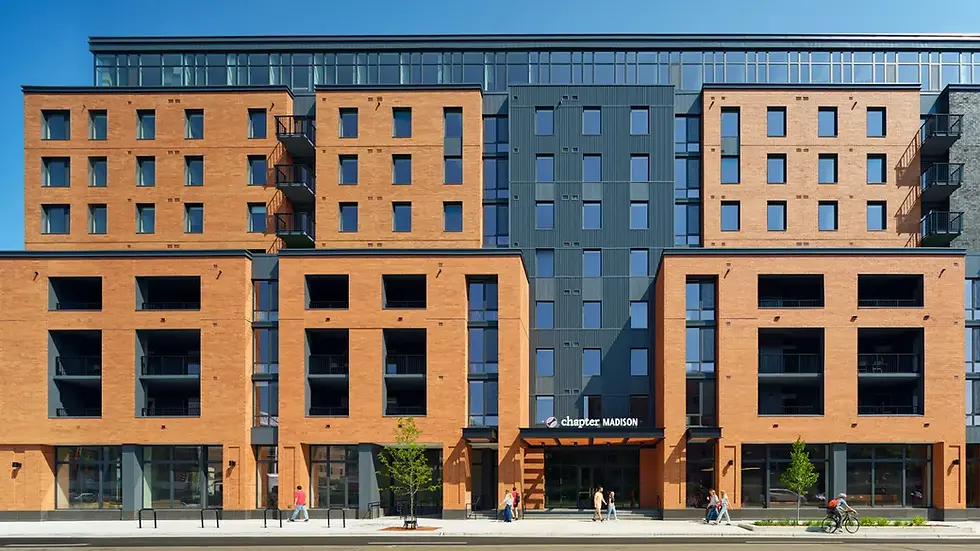
From frozen pipes in January to slip-and-fall claims in icy parking lots, multifamily ownership in Wisconsin comes with exposures that directly impact your insurance costs. At Wexford Insurance, we’ve helped multifamily property owners across the Midwest navigate these exact challenges—and one of the first questions we always hear is: How much does multifamily property insurance cost in Wisconsin?
The short answer: it depends. But below, we’ll break down realistic cost ranges, explain exactly what drives those premiums in Wisconsin, and show you how to control them without sacrificing protection.
Average Cost of Multifamily Property Insurance in Wisconsin
Multifamily properties are typically insured using a package of policies designed to protect the building, your liability, and your rental income. Below are realistic estimated ranges based on what we see working with multifamily owners across Wisconsin.
General liability insurance protects you if a tenant, guest, or vendor is injured on your property and holds you responsible.
Estimated cost: $40 to $110 per month ($480 to $1,320 annually)
Typical limit: $1M per occurrence / $2M aggregate
In Wisconsin, the most common claims we see involve icy walkways, poorly lit stairwells, and snow-covered parking lots.
“In Nate Jones’s experience as a former underwriting manager, slip-and-fall claims are one of the most consistently underestimated exposures for Midwestern property owners—especially in states like Wisconsin with extended freeze cycles.”
If you employ maintenance staff, cleaners, or leasing agents, workers’ compensation insurance is required.
Estimated rate: $1.30 to $3.00 per $100 of payroll
Monthly range: $120 to $450, depending on payroll
Wisconsin has a stable private workers’ comp market, but rates can increase if employees perform higher-risk tasks like snow removal or roof maintenance.
This is the backbone of your coverage. Commercial property insurance protects your physical structure:
Estimated cost: $210 to $580 per month ($2,500 to $7,000 annually)
Pricing depends heavily on:
Number of units
Building age and condition
Roof type and age
Replacement cost valuation
Location (urban vs. rural)
Older properties in cities like Milwaukee often fall on the higher end due to aging electrical systems and plumbing.
Learn more here: /commercial-property-insurance
Business Owner’s Policy (BOP)
For smaller multifamily buildings (typically under 10–12 units), a Business Owner’s Policy (BOP) bundles property and liability coverage.
Estimated cost: $240 to $650 per month ($2,900 to $7,800 annually)
At Wexford Insurance, we frequently recommend BOPs for duplexes and small apartment complexes because they often provide better value than separate policies.
This coverage replaces lost rent if units become uninhabitable due to a covered loss.
Estimated cost: $25 to $75 per month
We’ve seen this coverage become essential in Wisconsin after winter-related pipe bursts forced tenants out for weeks during repairs.
Umbrella Liability Insurance
An umbrella policy provides additional liability protection above your base limits.
Estimated cost: $200 to $600 per year
Given the litigation environment and the number of tenants involved, Nate Jones CPCU, ARM, CLCS, AU often recommends umbrella coverage for properties with more than 4 units.

What Factors Affect Multifamily Property Insurance Costs in Wisconsin?
Insurance pricing isn’t random—it’s driven by very specific risk factors. In Wisconsin, several stand out:
1. Winter Weather Exposure
Wisconsin’s long winters significantly impact insurance costs. Key risks include:
Ice accumulation leading to slip-and-fall claims
Frozen and burst pipes
Snow load damage to roofs
At Wexford Insurance, one of the most common claims we see involves frozen pipes in older Milwaukee properties where insulation is inadequate.
2. Age of Housing Stock
Cities like Milwaukee and Racine have a high concentration of older multifamily buildings. Older construction often means:
Outdated wiring
Galvanized plumbing
Roofing near end of life
These factors increase both claims frequency and severity.
3. Urban vs. Rural Location
Urban areas (Milwaukee, Madison): higher liability exposure, more tenant turnover
Rural areas: lower liability risk but higher fire response times
Each has a different underwriting profile.
4. Tenant Density
More units = more exposure. Shared spaces increase:
Injury risk
Property damage frequency
Legal complexity
5. Claims History
A history of water damage, fire, or liability claims will significantly increase your premiums.
6. Replacement Cost Inflation
Construction costs in Wisconsin have risen in recent years, especially for materials like lumber and labor, which drives property insurance premiums upward.
Wisconsin-Specific Insurance Requirements for Multifamily Properties
While insurance itself is not always legally required, Wisconsin has several state-specific regulations that directly impact your insurance and risk exposure.
Workers’ Compensation Requirements
Under Wisconsin law, you are required to carry workers’ compensation if:
You employ one or more employees, full-time or part-time
This requirement is enforced by the Wisconsin Department of Workforce Development.
Even hiring a part-time maintenance worker triggers this requirement.
Wisconsin Landlord-Tenant Regulations
Wisconsin law requires landlords to maintain safe and habitable living conditions, including:
Adequate heating systems
Functioning plumbing and electrical systems
Safe common areas
Failure to comply can result in liability claims—and insurance carriers will absolutely factor that into underwriting.
Smoke Detector and Safety Compliance
Wisconsin requires:
Working smoke detectors in all residential rental units
Carbon monoxide detectors in certain properties
Non-compliance can lead to denied claims in serious fire incidents.
Local Municipal Requirements
Cities like Madison and Milwaukee may require:
Property registration
Periodic inspections
Local code compliance
These inspections often uncover issues (handrails, lighting, egress) that directly affect insurance risk.
Recommended Coverage Expectations
While not always mandated, most lenders and experienced owners expect:
Property coverage at full replacement cost
Liability limits of at least $1M/$2M
Workers’ comp if employees exist
Loss of rental income protection
At Wexford Insurance, we’ve seen lenders in Madison refuse to close deals without proof of full replacement cost coverage.
How to Lower Your Multifamily Property Insurance Costs in Wisconsin
Insurance is a major expense—but there are proven ways to reduce it while maintaining strong coverage.
Bundle policies into a BOP when eligible
Upgrade plumbing and electrical systems in older buildings
Install snow and ice mitigation measures (heated cables, salt plans)
Improve lighting and safety features in common areas
Maintain proper insulation to prevent frozen pipes
Increase deductibles if you have sufficient reserves
Work with an independent agency like Wexford Insurance to shop multiple carriers
“One of the most common mistakes Nate Jones CPCU, ARM, CLCS, AU sees multifamily owners make is underinvesting in preventative maintenance. A small plumbing upgrade today can prevent a massive water claim tomorrow.”
FAQ: Wisconsin Multifamily Property Insurance Costs
Is multifamily property insurance required by law in Wisconsin?
No, Wisconsin does not legally require property insurance. However, lenders almost always require it, and operating without it exposes you to significant financial risk.
Why is insurance higher for Milwaukee properties?
Milwaukee has older building stock, higher tenant density, and more frequent liability claims, which increases underwriting risk and premiums.
Does Wisconsin weather really impact insurance costs that much?
Yes. Freeze-thaw cycles, snow loads, and icy conditions are major contributors to claims—and insurers price that risk accordingly.
Can I insure an older multifamily building in Wisconsin?
Yes, but it may require upgrades. Carriers often require updates to roofing, electrical, or plumbing before offering coverage.
Why Wisconsin Multifamily Property Owners Choose Wexford Insurance
At Wexford Insurance, multifamily property coverage isn’t something we “also do”—it’s a core part of our business. We work with property owners across Wisconsin, from small duplex investors to owners of large apartment complexes.
As an independent agency and Trusted Choice member, we represent multiple insurance carriers. That means we don’t force you into one company’s box—we compare options to find the best fit for your property.
Nate Jones, CPCU, ARM, CLCS, AU—our founder and Director of Insurance—brings a unique perspective. He studied Insurance and Risk Management at Indiana State University and spent years as an underwriting manager before launching Wexford Insurance.
At Wexford Insurance, we recently helped a Madison multifamily owner restructure their insurance program after repeated water damage claims. By adjusting deductibles, improving maintenance protocols, and moving to a better carrier fit, we helped stabilize their premiums while strengthening coverage.
That’s the kind of hands-on guidance you can’t get from a generic online quote platform.
Get a Multifamily Property Insurance Quote in Wisconsin Today
If you own or are purchasing a multifamily property in Wisconsin, the best next step is to get a tailored quote based on your building, location, and risk profile.
Wexford Insurance Address: 107 N State Road 135, STE 304, Greenwood, IN 46142
Call 317-942-0549 or visit www.wexfordins.com.We will compare multiple carriers and help you secure the right protection at the best possible price.
.


