
Best Thread Sealants for HVAC Gas Lines (Top Picks)
Gas line sealing is not the place for guesswork, shortcuts, or whatever leftover goo is sitting in your toolbox. When you're dealing with HVAC gas lines, even a minor leak can turn into a serious safety hazard, failed inspections, or expensive callbacks that nobody is going to clap for.

That’s why professional HVAC technicians rely on high-quality thread sealants designed specifically for gas applications. The right product ensures leak-free performance, code compliance, and long-term reliability across residential and commercial systems.
In this guide, we break down the best thread sealants for HVAC gas lines in 2026, including top pipe dopes, PTFE-based compounds, and hybrid formulas trusted by contractors.
Why Thread Sealants Matter for Gas Lines
Thread sealants are used to fill microscopic gaps between threaded pipe connections. On gas lines, this is critical because:
Natural gas and propane are highly volatile
Even tiny leaks can pose safety risks
System pressure changes can loosen weak seals
Building codes require approved sealing compounds
Inspections often fail due to improper materials
Using the correct sealant isn’t just best practice—it’s mandatory for professional HVAC work.
What to Look for in Gas Line Thread Sealants
Gas-Rated Certification
Always choose products rated for natural gas, propane, and other fuel gases. Not all sealants are approved for gas applications.
PTFE Content
Polytetrafluoroethylene (PTFE) improves sealing performance and resistance to vibration and temperature changes.
Temperature and Pressure Resistance
HVAC gas systems experience fluctuating pressure and environmental conditions, so durability matters.
Ease of Application
Brush-on compounds and tape-style sealants each have their place depending on job type.
Best Thread Sealants for HVAC Gas Lines (2026)
RectorSeal is one of the most trusted names in HVAC and plumbing sealants, and T Plus 2 is a contractor staple.
Key Features
Gas-rated for natural gas and propane
Contains PTFE for enhanced sealing
Non-hardening compound
Excellent temperature resistance
Works on metal and plastic threads
Best For
General HVAC gas line installations, residential systems, and service work.

Oatey Great White is widely used across HVAC and plumbing industries for gas and water applications.
Key Features
Gas-rated formulation
PTFE-enhanced sealing compound
Smooth brush application
Non-toxic and non-hardening
Compatible with multiple pipe materials
Best For
Versatile use across residential and commercial HVAC gas installations.

Blue Monster has become a popular contractor choice for high-performance sealing applications.
Key Features
High PTFE content
Rated for gas, air, and water lines
Strong leak resistance
Smooth application consistency
Long-lasting seal integrity
Best For
Commercial HVAC systems and high-pressure gas lines.
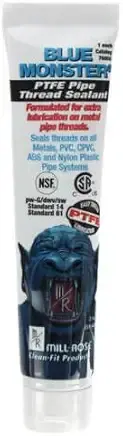
Harvey’s TM-5 is a professional-grade sealant designed for demanding mechanical systems.
Key Features
Gas-rated thread sealant
PTFE-based formulation
Resistant to vibration and thermal cycling
Non-separating compound
Strong adhesion to metal threads
Best For
Heavy-duty HVAC installations and mechanical gas systems.

Pipe Dope vs PTFE Tape for Gas Lines
This debate has been around longer than half the HVAC apprentices on job sites, and for good reason.
Pipe Thread Sealant (Dope)
Fills micro-gaps in threads
Better for high-pressure systems
Often PTFE-enhanced
Preferred by most HVAC pros
PTFE Tape
Clean and easy to apply
Good for light to moderate pressure
Must be gas-rated (yellow tape)
Often used as a supplement, not primary seal
Most professionals prefer pipe dope for gas lines because it provides a more reliable long-term seal under vibration and pressure changes.
Best Thread Sealants by Application
Best Overall
RectorSeal T Plus 2
Reliable, widely used, and trusted across residential and commercial HVAC systems.
Best for Heavy-Duty Systems
Harvey TM-5
Built for demanding mechanical and commercial gas applications.
Best Value Option
Oatey Great White
Strong performance at a competitive price point.
Best for Service Work
RectorSeal 5
Fast application and dependable sealing for repairs and maintenance.
Safety Tips for HVAC Gas Line Sealing
Gas work is not forgiving, so follow proper procedures:
Always clean pipe threads before applying sealant
Apply evenly without over-application
Use only gas-rated products
Tighten fittings to manufacturer torque specs
Perform leak testing after installation
Follow local code requirements strictly
A rushed gas line job is just a future problem waiting to introduce itself loudly.
Protect Your HVAC Business
HVAC contractors working with gas systems face serious liability risks. One small mistake can turn into a major financial and legal issue.

To protect your business operations, tools, and technicians, consider getting a tailored insurance quote from Wexford Insurance. Coverage options can include general liability, commercial auto, workers’ compensation, and more—because duct tape and optimism are not legally recognized insurance policies.
Final Thoughts
Choosing the best thread sealant for HVAC gas lines isn’t about brand loyalty—it’s about safety, compliance, and long-term system reliability. Products like RectorSeal T Plus 2, Oatey Great White, and Harvey TM-5 consistently deliver the performance professionals depend on in 2026.
Whether you're installing new gas lines or servicing existing systems, using the right sealant helps ensure safe operation, fewer leaks, and fewer callbacks that ruin your schedule and your mood.


