Best N95 and P100 Filters to Stock for Restoration Crews
Every restoration contractor knows that respiratory protection is one of the most important investments for crew safety. Whether your team is handling mold remediation, water damage restoration, fire damage cleanup, biohazard cleaning, or demolition work, airborne contaminants can create serious health risks.

Stocking the right N95 respirators and P100 filters helps ensure your technicians are prepared for a variety of restoration environments. From mold spores and dust to soot and insulation fibers, quality respiratory protection can help keep crews safe while supporting OSHA-compliant safety programs.
In this guide, we'll cover some of the best N95 respirators and P100 filters restoration companies should keep in inventory.
Why Restoration Contractors Need N95 and P100 Respiratory Protection
Restoration projects frequently expose workers to:
Mold spores
Dust and debris
Drywall particles
Soot and smoke residue
Insulation fibers
Airborne contaminants
Demolition dust
N95 respirators are commonly used for lower-hazard particulate environments, while P100 filters provide a higher level of particulate filtration and are often preferred for mold remediation and more demanding restoration applications.
Benefits include:
Improved worker safety
Reduced contaminant exposure
Increased compliance with safety standards
Better respiratory protection
Comfortable all-day wear
N95 vs. P100 Filters
N95 Respirators
N95 respirators filter at least 95% of airborne particles and are commonly used for:
General cleanup
Dust-producing activities
Light restoration work
Property inspections
P100 Filters
P100 filters provide a higher level of particulate filtration and are commonly used for:
Mold remediation
Heavy demolition
Contaminated environments
Extended restoration projects
Many restoration companies stock both options to ensure crews have appropriate protection for different jobsite conditions.
The 3M Aura 9205+ is one of the most popular N95 respirators among contractors due to its comfort and secure fit.
Key Features
NIOSH-approved N95 protection
Three-panel design
Comfortable nose foam
Individual packaging
Low-profile fit
Best For
General restoration work, inspections, and dust-producing projects.

The Honeywell N95 Respirator offers dependable protection and comfort for restoration crews working in dusty environments.
Key Features
Latex-free construction
Adjustable nose bridge
Lightweight design
Comfortable fit
NIOSH-approved protection
Best For
Water damage restoration and general cleanup work.

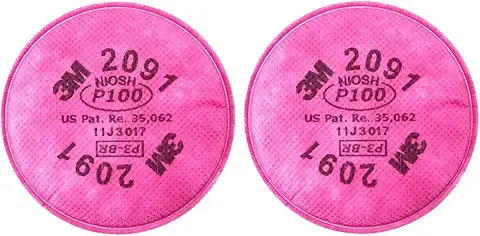
The 3M 2091 is one of the most commonly used P100 filters in mold remediation and restoration industries.
Key Features
P100 particulate filtration
Lightweight filter design
Compatible with multiple respirator models
Easy installation
Long service life
Best For
Mold remediation, demolition, and heavy particulate exposure.
The 3M 7093 provides advanced particulate protection while offering a hard-shell design that improves durability in harsh conditions.
Key Features
P100 filtration efficiency
Durable hard case housing
Low breathing resistance
NIOSH-approved
Long-lasting design
Best For
Commercial restoration projects and demanding remediation environments.

The Honeywell North 7580P100 is a trusted option for restoration professionals seeking high-performance particulate protection.
Key Features
P100-rated filtration
Durable construction
Secure respirator compatibility
Extended service life
Lightweight design
Best For
Mold removal and environmental remediation work.

How Many Respirators and Filters Should Restoration Companies Keep in Stock?
A restoration company can quickly go through respiratory protection supplies, especially during large mold remediation and disaster recovery projects.
Inventory levels should be based on:
Crew size
Project volume
Service offerings
Emergency response capacity
Seasonal demand
Many restoration companies maintain a surplus inventory to ensure they are prepared for large commercial losses and emergency calls.
Build a Complete Restoration PPE Program
Respiratory protection is most effective when combined with other PPE, including:
Nitrile gloves
Safety glasses and goggles
Tyvek coveralls
Rubber boots
Boot covers
Hearing protection
Hard hats
A comprehensive PPE strategy can help improve safety and reduce jobsite risks.
Protect Your Restoration Business with the Right Insurance
While respirators and filters help protect your employees, every restoration company should also protect itself from financial risks. Restoration contractors face potential liability claims, employee injuries, equipment losses, pollution exposures, and property damage allegations.

Wexford Insurance specializes in insurance solutions for restoration, remediation, and environmental contractors. Whether you're starting a new restoration company or growing an established operation, having the right coverage can help protect your business from unexpected losses.
Final Thoughts
Proper respiratory protection plays a critical role in worker safety and jobsite performance. By maintaining an inventory of high-quality particulate protection options, restoration companies can better prepare their teams for a wide range of environmental conditions while supporting safe and professional operations.
FAQs
Are P100 filters better than N95 respirators for mold remediation?
P100 filters generally provide a higher level of particulate filtration and are commonly preferred for mold remediation and heavy dust environments.
How often should P100 filters be replaced?
Replacement frequency depends on usage, environmental conditions, and manufacturer recommendations. Filters should be replaced when breathing resistance increases or contamination occurs.
Should restoration companies stock both N95 and P100 options?
Yes. Maintaining both allows crews to use the appropriate respiratory protection based on jobsite hazards, exposure levels, and project requirements.