Best Media Blasting Equipment for Fire Damage Restoration
- Aug 10
- 4 min read
Fire damage restoration often requires more than traditional cleaning methods. When soot, char, smoke residue, and odors penetrate structural materials, media blasting can provide a fast and effective solution. Restoration contractors frequently use media blasting equipment to clean wood framing, brick, concrete, crawl spaces, attics, and other surfaces affected by fire damage.

The right media blasting equipment can significantly reduce labor costs, speed up restoration timelines, and improve cleaning results. Whether you're removing heavy soot, preparing surfaces for encapsulation, or restoring fire-damaged structures, investing in quality blasting equipment can help your restoration business operate more efficiently.
In this guide, we'll review some of the best media blasting equipment options for fire damage restoration contractors and discuss what features to consider before purchasing.
Why Media Blasting Is Used in Fire Restoration
Media blasting removes soot, char, smoke residue, and contaminants from surfaces using compressed air and specialized blasting media such as baking soda, crushed glass, walnut shells, dry ice, or sponge media.
Benefits include:
Faster soot removal
Improved surface restoration
Reduced manual scrubbing
Better access to hard-to-reach areas
Effective odor source removal
Improved preparation for sealing and painting
For heavily damaged structures, media blasting can often save materials that would otherwise require replacement.
The LE LEMATEC Sand Blaster Gun Kit is a versatile blasting tool commonly used for surface cleaning and restoration applications. Its compact design allows contractors to perform detailed cleaning work in confined spaces.
Key Features
Pneumatic operation
Durable aluminum construction
Adjustable media flow
Lightweight design
Compatible with multiple blasting media
Best For
Spot soot removal
Wood surface cleaning
Small-scale restoration projects
Detailed restoration work

TCP Global's blasting gun is a popular choice for contractors seeking an affordable and reliable blasting solution. Its user-friendly design makes it suitable for a variety of restoration tasks.
Key Features
Gravity-feed design
Adjustable spray pattern
Multiple nozzle options
Durable construction
Easy maintenance
Best For
Residential fire restoration
Smoke residue removal
Surface preparation
Small contractor operations

The Jewboer Portable Sandblaster Kit offers flexibility and ease of use for restoration professionals handling localized fire damage cleanup projects.
Key Features
Portable operation
Multiple nozzle attachments
High-pressure performance
Compact storage
Flexible media compatibility
Best For
Char removal
Smoke-damaged framing
Detailed blasting applications
Residential restoration projects

The Neiko Pneumatic Sand Blaster Gun is designed for heavy-duty cleaning applications and delivers strong blasting performance for challenging restoration environments.
Key Features
Heavy-duty construction
Comfortable grip design
Efficient media delivery
Corrosion-resistant materials
High airflow efficiency
Best For
Soot-covered surfaces
Fire-damaged wood
Masonry cleaning
Contractor service vehicles

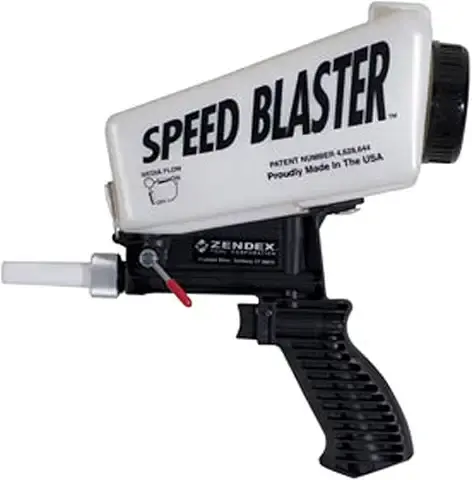
The Speed Blaster Gravity Feed Gun is widely used for precision surface cleaning and restoration applications. Its lightweight configuration makes it easy to use during extended restoration projects.
Key Features
Gravity-feed hopper
Lightweight design
Adjustable blasting performance
Durable nozzle construction
Consistent media flow
Best For
Attic restoration
Wood beam cleaning
Detailed soot removal
Small-to-medium restoration jobs
What to Look for in Media Blasting Equipment
Media Compatibility
Different restoration projects require different blasting media. Ensure equipment can handle materials such as:
Baking soda
Crushed glass
Walnut shell media
Sponge media
Dry ice alternatives
Fine abrasives
Air Compressor Requirements
Most blasting equipment relies heavily on air volume and pressure. Verify your compressor can meet the equipment's requirements before purchasing.
Portability
Fire restoration contractors frequently work in occupied buildings, attics, crawl spaces, and remote job sites. Portable equipment improves productivity and jobsite flexibility.
Durability
Restoration equipment must withstand daily use and exposure to abrasive materials. Heavy-duty construction often delivers a better long-term return on investment.
Best Practices for Fire Restoration Media Blasting
To improve restoration results:
Perform containment before blasting.
Use proper personal protective equipment.
Select the least aggressive media capable of achieving the desired result.
Test surfaces before full-scale blasting.
Follow local environmental disposal requirements.
Complete odor verification after cleaning.
Media blasting should be integrated with deodorization, HEPA vacuuming, and encapsulation when necessary for complete fire restoration.
Protecting Your Restoration Business
Fire restoration contractors face unique exposures including property damage claims, equipment theft, employee injuries, and liability risks. Specialized equipment represents a significant investment, making proper insurance coverage an important consideration.

Wexford Insurance works with restoration contractors to help identify insurance solutions designed for the restoration and remediation industry. Whether your business performs fire damage restoration, smoke remediation, mold remediation, or disaster recovery services, the right coverage can help protect your company from unexpected losses.
If you're evaluating your current insurance program or launching a restoration business, consider contacting Wexford Insurance for a customized quote.
Final Thoughts
Media blasting can be a valuable tool for restoration professionals looking to remove soot, smoke residue, and fire-related contamination more efficiently. Selecting equipment that matches your project types, media preferences, and production requirements can help improve restoration outcomes, increase efficiency, and support the growth of your restoration business.
FAQs
What media is commonly used for fire damage restoration?
Common media include baking soda, crushed glass, walnut shells, sponge media, and dry ice. The best choice depends on the surface being cleaned and the severity of contamination.
Is media blasting safe for wood framing?
Yes. When the correct blasting media and pressure settings are used, media blasting can effectively clean wood framing while minimizing damage to the substrate.
Does media blasting remove smoke odors?
Media blasting helps remove soot and smoke residues that contribute to odors. For best results, contractors often combine blasting with deodorization and sealing procedures.