
Best Gloves for Pest Control Technicians
Pest control technicians face a unique combination of workplace hazards every day. From handling pesticides and insecticides to working in crawl spaces, attics, and rodent-infested environments, hand protection is one of the most important pieces of personal protective equipment (PPE) on the job.

The best gloves for pest control technicians must provide chemical resistance, puncture protection, comfort, and durability. Whether you're applying liquid treatments, setting traps, or performing inspections, choosing the right gloves can help reduce injuries, prevent chemical exposure, and improve overall job performance.
In this guide, we'll review some of the best gloves available for pest control professionals and explain what features matter most when selecting hand protection for your business.
Why Pest Control Technicians Need Specialized Gloves
Unlike many trades, pest control work exposes technicians to multiple hazards simultaneously.
Common risks include:
Contact with pesticides and chemical concentrates
Exposure to rodent droppings and contaminated surfaces
Bites from insects and animals
Cuts from sharp edges in crawl spaces and attics
Abrasions from rough surfaces
Skin irritation from repeated chemical exposure
A standard pair of work gloves often isn't enough. Pest control professionals need gloves specifically designed to resist chemicals while maintaining dexterity for precise work.
What to Look for in Pest Control Gloves
Before reviewing specific products, consider these key factors.
Chemical Resistance
Many pest control applications involve pesticides that can penetrate certain glove materials. Nitrile gloves are often preferred because they offer excellent resistance to a wide range of chemicals.
Always verify compatibility with the products listed on the pesticide label.
Puncture Protection
Technicians frequently encounter nails, staples, sharp debris, and rodent traps. Gloves with reinforced palms or thicker materials can help reduce puncture risks.
Grip
Wet conditions, spray equipment, and outdoor environments require gloves with reliable grip surfaces to maintain control and safety.
Comfort
Since technicians may wear gloves for several hours per day, comfort matters. Gloves that are too bulky can reduce productivity and lead to hand fatigue.
Durability
Frequent glove replacement increases operating costs. Durable gloves help maximize value while maintaining protection.
Best Disposable Gloves for Pest Control Technicians
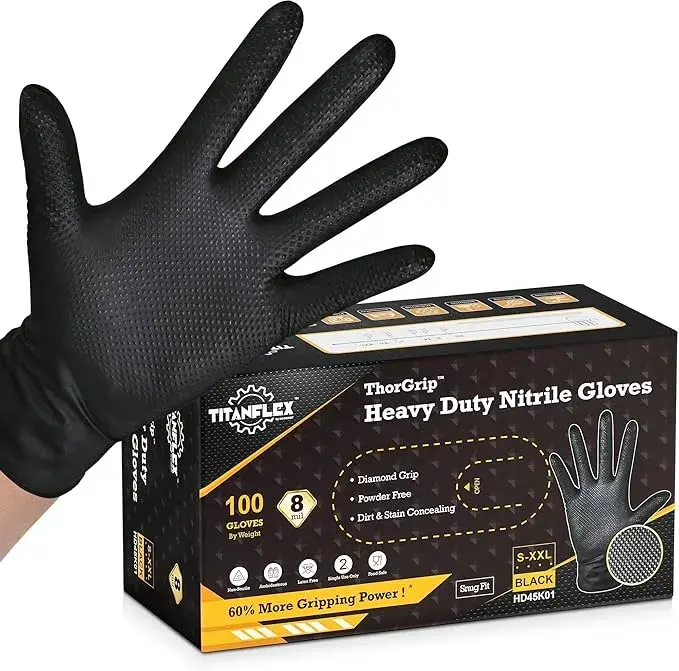
The TitanFlex Heavy Duty Nitrile Gloves have become a favorite among pest control professionals due to their exceptional durability and chemical resistance.
Key features include:
6-mil nitrile construction
Latex-free design
Textured fingertips for grip
Excellent puncture resistance
Suitable for pesticide applications
These gloves strike an excellent balance between dexterity and protection, making them ideal for everyday pest control work.
Ammex Gloveworks gloves are widely used across multiple industries that require chemical protection.
Benefits include:
High-visibility orange color
Industrial-grade nitrile material
Enhanced tear resistance
Diamond texture for superior grip
Comfortable fit for extended wear
Many pest control companies choose these gloves because technicians can easily spot damage or contamination during use.

For technicians seeking flexibility and tactile sensitivity, Raven Black Nitrile Gloves offer excellent performance.
Advantages include:
Professional-grade nitrile
Strong chemical resistance
Comfortable fit
High dexterity
Affordable bulk purchasing options
These gloves work particularly well for inspections and precision applications.

Best Reusable Gloves for Pest Control Work
For jobs requiring greater durability than disposable gloves can provide, the SHOWA 377 is a strong option.
Notable features:
Nitrile-coated palm
Excellent grip in wet environments
Breathable back construction
High abrasion resistance
Comfortable all-day wear
These gloves are especially useful for inspections, trap placement, and exclusion work.

When working with concentrated chemicals, Ansell AlphaTec gloves provide advanced protection.
Benefits include:
Superior chemical resistance
Long cuff design
Durable construction
Comfortable interior lining
Suitable for mixing and handling pesticides
These gloves are often used during chemical preparation and transfer operations.

For technicians performing exclusion work or structural repairs, leather work gloves may provide added protection.
Features include:
Water-resistant leather
Reinforced palm construction
Excellent durability
Comfortable fit
Good abrasion resistance
While not intended for direct chemical handling, these gloves are valuable during repair and exclusion projects.

Disposable vs. Reusable Gloves
Both glove types have a place in pest control operations.
Disposable Gloves
Best for:
Pesticide applications
Inspections
Sanitation work
Situations requiring frequent glove changes
Advantages:
Convenient
Lower contamination risk
Excellent dexterity
Reusable Gloves
Best for:
Exclusion work
Equipment handling
Structural repairs
Heavy-duty tasks
Advantages:
Greater durability
Reduced long-term costs
Improved puncture resistance
Many successful pest control companies maintain both options in their service vehicles.
OSHA and PPE Compliance Considerations
Employers are responsible for providing appropriate PPE when employees face workplace hazards.
Proper glove selection should be based on:
Chemical exposure risks
Task requirements
Manufacturer recommendations
Product safety data sheets (SDS)
Documenting PPE policies and providing technician training can help reduce workplace injuries and improve compliance efforts.
How Gloves Help Reduce Business Risk
Many business owners view gloves as a simple equipment expense. In reality, hand protection plays a significant role in risk management.
Quality gloves can help prevent:
Chemical exposure claims
Workplace injuries
Lost productivity
Workers' compensation claims
Employee downtime
When combined with proper training and safety procedures, PPE investments often deliver significant long-term savings.
Insurance Considerations for Pest Control Businesses
Even with strong safety practices, accidents can happen. Pest control companies face a variety of liability exposures, including chemical drift claims, property damage allegations, employee injuries, and environmental incidents.

Having the right insurance coverage can help protect your business from unexpected losses.
Coverage commonly considered by pest control companies includes:
General liability insurance
Workers' compensation insurance
Commercial auto insurance
Pollution liability coverage
Professional liability insurance
Inland marine coverage for equipment
Working with an insurance agency that understands the pest control industry can help ensure your business receives coverage tailored to its unique risks.
If you're evaluating insurance options for your pest control company, Wexford Insurance can help you review your exposures and obtain competitive coverage solutions designed specifically for service contractors and specialty businesses.
Call 317-942-0549 or visit www.wexfordins.com.
Final Thoughts
The best gloves for pest control technicians combine chemical resistance, durability, comfort, and protection. Whether you choose disposable nitrile gloves for pesticide applications or reusable gloves for exclusion work, investing in quality PPE helps protect technicians while improving operational efficiency.
Products such as TitanFlex Heavy Duty Nitrile Gloves, Ammex Gloveworks HD Orange Nitrile Gloves, Raven Black Nitrile Gloves, SHOWA 377 Gloves, Ansell AlphaTec Gloves, and Wells Lamont HydraHyde Gloves consistently rank among the top choices for pest control professionals.
Protecting your employees starts with the right equipment. Protecting your business requires the right insurance coverage. By investing in both, pest control companies can build safer, more resilient operations while reducing long-term risk and liability exposure.


