
Best Epoxy Mixing Tools (Drills, Paddles & Bucket Systems That Prevent Failure)
Updated: Feb 27
Epoxy mixing mistakes are responsible for most installation failures—poor curing, soft spots, sticky areas, and uneven sheen all often trace back to improper mixing. Whether you're installing countertops, garage floor epoxy, or metallic coatings, the tools you use determine how well the resin and hardener combine. To help contractors and DIY installers avoid costly failures, here are the best epoxy mixing tools you should be using in 2026.

A proper drill is the heart of your mixing system. Low‑power or overly fast drills introduce air bubbles and cause improper blending. Look for a drill with:
Low RPM control (300–450 RPM is ideal for epoxy)
High torque for thick materials
Variable speed trigger for smooth mixing
Contractors often prefer mixing drills from DeWalt, Makita, and Collomix for their durability and torque consistency.

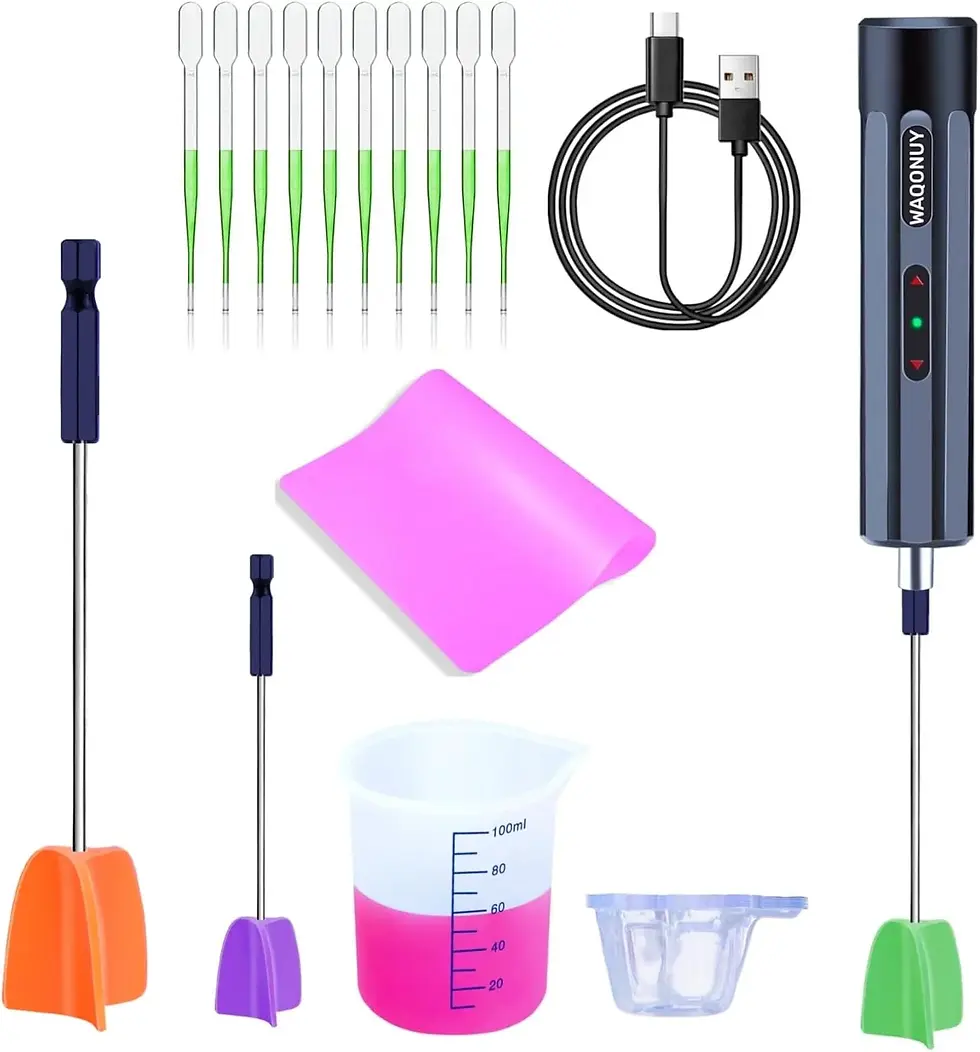
Not all paddles are created equal. Proper epoxy mixing requires paddles designed to pull material from the bottom of the bucket upward without trapping air. Two top options:
Helix paddles (ideal for smaller batches)
Ribbon paddles (best for flooring and large volumes)
Avoid paint paddles or drywall paddles—they create bubbles and fail to blend resin thoroughly.

Accurate ratios are non‑negotiable. Using clear graduated mixing buckets helps installers measure Part A and Part B precisely. Many failures happen because contractors “eyeball it” or use non‑marked containers.
Look for:
Clear measurement lines
Solvent-resistant plastic
Flat bottoms for clean mixing

For large epoxy flooring jobs, contractors often “box” their epoxy—pouring mixed epoxy back and forth between two buckets to ensure consistency. A dedicated double‑bucket system prevents hot spots, streaks, and uneven hardening.

Uneven mixing times create soft or uncured areas. Most epoxy formulas require 2–5 minutes of continuous mixing, depending on volume. A simple digital timer ensures every batch is mixed exactly the same.
Why the Right Tools Matter
Incorrectly mixed epoxy leads to coating failures, customer complaints, and costly do‑overs. Using the right mixing tools ensures:
Proper cure
Consistent color
Strong adhesion
Bubble‑free results

Protect Your Epoxy Business
Epoxy installers face unique risks—chemical spills, equipment damage, property claims, and curing failures. Before your next project, protect your business with customized coverage from Wexford Insurance. They specialize in contractor insurance and offer fast, affordable quotes.


