
Best Cordless Vacuum Pumps for HVAC Technicians (Top Picks)
- Jun 19
- 4 min read
HVAC technology is evolving rapidly—and so are the tools technicians rely on daily. One of the most important upgrades in recent years is the rise of cordless vacuum pumps, offering unmatched portability and convenience for system evacuation.

Traditional vacuum pumps require power outlets, extension cords, and sometimes limited jobsite flexibility. Cordless models eliminate those constraints, allowing HVAC technicians to work faster, move freely, and complete evacuations efficiently—even in hard-to-access locations.
In this guide, we break down the best cordless vacuum pumps for HVAC technicians, focusing on performance, battery compatibility, portability, and real-world jobsite usability. These models are widely available on Amazon and trusted in the field.
Why HVAC Technicians Are Switching to Cordless Vacuum Pumps
Cordless vacuum pumps aren’t just a convenience—they improve workflow and productivity.
Key Benefits:
No power cords required – ideal for rooftops and remote jobs
Faster setup and teardown
Improved mobility on job sites
Compatible with existing battery platforms
Reduced trip hazards from cables
For service technicians and installers, this translates directly into faster job completion and more daily capacity.
What to Look for in a Cordless HVAC Vacuum Pump
CFM Rating (Flow Rate)
Cordless pumps typically offer 1.5–5 CFM, which is ideal for residential and light commercial systems.
Battery Compatibility
Most models use platforms like:
Milwaukee M18
Makita 18V LXT
NAVAC rechargeable battery systems
Choosing a compatible system saves money and improves efficiency.
Ultimate Vacuum Level
Look for pumps capable of achieving 50–100 microns for proper evacuation.
Oil Management System
Efficient oil separation and easy oil changes are critical for maintaining performance.
Portability
Lightweight designs make it easy to carry between job sites and tight work areas.
Best Cordless Vacuum Pumps for HVAC Technicians
Best Overall Cordless HVAC Pump
Milwaukee leads the cordless HVAC tool category, and the M18 vacuum pump is designed specifically for field use.
Key Features:
Runs on M18 REDLITHIUM batteries
True 5 CFM performance
Capable of deep vacuum levels
Compatible with standard HVAC hoses
Cord-free convenience
Why It Stands Out: This is one of the most powerful cordless pumps available, making it suitable for both residential and light commercial work.

Best Compact Professional Option
NAVAC offers a high-quality compact pump designed for technicians who prioritize portability.
Key Features:
Dual-stage cordless performance
Lightweight and compact design
Strong vacuum capability
Efficient oil management system
Long battery runtime
Why It Stands Out: Perfect for service technicians who need a reliable, easy-to-carry pump for residential jobs.

Best for Makita Users
Makita provides a strong cordless solution for technicians already using their battery ecosystem.
Key Features:
18V LXT battery platform
Compact, lightweight design
Quiet operation
Durable construction
Long runtime per charge
Why It Stands Out: Ideal for technicians already invested in Makita tools who want to streamline their workflow.

Best Hybrid (Cord + Cordless Capability)
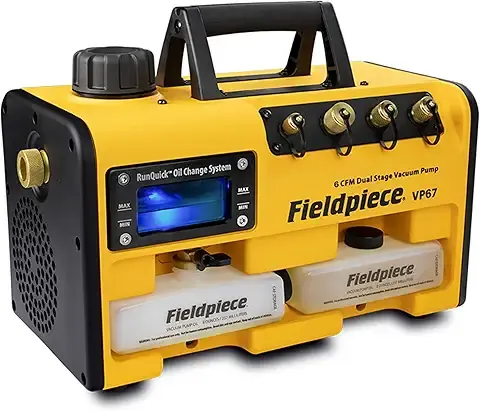
Fieldpiece offers a hybrid approach combining portability with traditional performance.
Key Features:
Dual power capability (cord + field flexibility)
Large oil capacity
Deep vacuum performance
Durable construction
Designed for HVAC professionals
Why It Stands Out:A versatile option for technicians who want the flexibility of cordless with the reliability of corded backup.
Best Lightweight Backup Option
Robinair offers portable solutions that are ideal as secondary or travel-friendly pumps.
Key Features:
Compact and lightweight
Compatible with multiple setups
Easy to transport
Reliable evacuation performance
Designed for smaller systems
Why It Stands Out: Perfect as a backup pump or for quick service jobs requiring mobility.

How HVAC Contractors Use Cordless Vacuum Pumps
Cordless vacuum pumps are used for:
Evacuating refrigerant systems before charging
Removing air and moisture
Preparing systems for installation or repair
Working in remote or hard-to-reach areas
Quick service calls without power access
They improve flexibility and efficiency on every job.
Choosing the Right Cordless Vacuum Pump
Residential HVAC Technicians
The Milwaukee M18 or NAVAC NP2DLM are ideal for everyday service calls.
Light Commercial Work
The Appion Tez8 or Fieldpiece VP55 offer stronger evacuation performance.
Budget & Backup Options
The Robinair portable pump is a great lightweight secondary tool.
Why Cordless Vacuum Pumps Matter
Without a cordless pump, you may face:
Limited mobility on job sites
Slower setup times
Dependency on power sources
Reduced efficiency
With a cordless system, you can:
Work faster and more efficiently
Move freely between jobs
Reduce setup time
Increase daily productivity
For HVAC contractors, these benefits directly impact profitability.
Protect Your HVAC Business with Wexford Insurance
Upgrading your tools improves your workflow—but it doesn’t protect your business from unexpected risks.
HVAC contractors face daily exposure to liability claims, equipment damage, and jobsite accidents.

Wexford Insurance specializes in helping HVAC professionals secure coverage tailored to real-world risks. Whether you're running a small operation or scaling your team, the right policy ensures you stay protected.
Call 317-942-0549 or visit https://www.wexfordinsurance.com/ to get a customized quote for your HVAC business today.
Final Thoughts
Cordless vacuum pumps are transforming HVAC service work by providing unmatched convenience and flexibility.
If you want the best overall option, the Milwaukee M18 Cordless Vacuum Pump stands out as an industry leader.
For portability, the NAVAC NP2DLM is a strong contender.
And for speed-focused performance, the Appion Tez8 delivers excellent results.
Invest in the right tools—and protect your business while you’re at it—and you’ll be ready to handle any HVAC job with efficiency and confidence in 2026 and beyond.


