
Best Capacitor Testers for Pool Pump Troubleshooting (Service Tech Guide)
- Jun 15
- 5 min read
Few things are more common in pool service than arriving at a job where the customer says, "The pump just hums."

Nine times out of ten, a technician immediately starts thinking about the capacitor.
Start capacitors and run capacitors are among the most common failure points in pool pump motors. When they fail, pumps may struggle to start, trip breakers, overheat, or simply sit there making expensive noises.
A quality capacitor tester helps eliminate guesswork and quickly confirms whether the capacitor is actually the problem. Instead of replacing parts based on suspicion, you can verify performance with real measurements and complete repairs with confidence.
This guide covers the best capacitor testers for pool pump troubleshooting, what features matter most, and which tools deserve a place in your service kit.
Why Pool Technicians Need a Capacitor Tester
Modern pool pumps rely heavily on capacitors for efficient startup and operation.
When a capacitor begins to fail, symptoms can include:
Pump motor humming without starting
Slow startup performance
Frequent breaker trips
Motor overheating
Reduced efficiency
Complete motor failure
A dedicated capacitor tester or a multimeter with capacitance testing capability allows technicians to verify component health before replacing parts.
Because replacing random components until something works is less "professional troubleshooting" and more "electrical roulette."
What to Look for in a Capacitor Tester
Capacitance Measurement Range
Pool pump capacitors commonly range from approximately 5µF to over 300µF depending on motor type. Ensure the tester covers both start and run capacitors.
Accuracy
Reliable readings help determine whether a capacitor is still operating within manufacturer tolerances.
Ease of Use
Fast readings are important during service calls where efficiency matters.
Durability
Service trucks are not gentle environments. Tools should withstand drops, vibration, moisture, and daily use.
Additional Electrical Functions
Many technicians prefer meters that can also test voltage, continuity, resistance, and current.
Best Capacitor Testers for Pool Pump Troubleshooting
Best Overall Choice
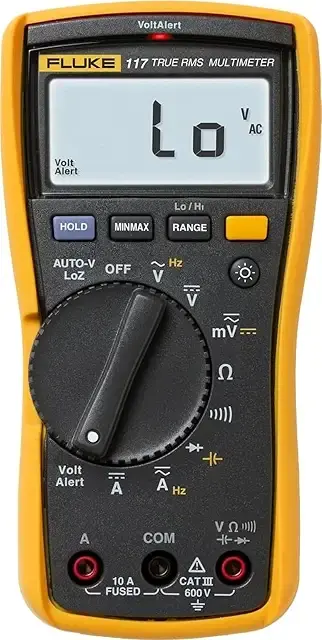
Fluke has built its reputation on professional-grade electrical testing equipment, and the 117 remains one of the most trusted meters available.
Key Features:
Accurate capacitance testing
Voltage and resistance measurement
Compact design
Durable construction
Professional-grade reliability
Why Pool Pros Like It
It handles capacitor testing while also serving as a complete electrical diagnostic tool for pool equipment troubleshooting.
Best Value Professional Option
Klein Tools delivers an excellent balance of functionality, durability, and affordability.
Key Features:
Capacitance testing function
Auto-ranging capability
Temperature measurement
Rugged protective housing
Backlit display
Why It Stands Out
It offers nearly everything a pool technician needs without reaching premium price territory.

Best for Service Technicians
Fieldpiece products are designed specifically with field service professionals in mind.
Key Features:
Capacitance testing
Expandable accessory options
Compact design
Strong battery life
Durable construction
Why It Stands Out
The slim profile makes it particularly useful when working inside tight pool equipment compartments.

Best Budget-Friendly Option
For technicians seeking an affordable diagnostic tool, AstroAI offers impressive functionality.
Key Features:
Capacitance testing
True RMS capability
Large display
Compact design
User-friendly interface
Why It Stands Out
It provides excellent value for newer pool professionals building their diagnostic toolkit.

Best Mid-Range Choice
Extech has long been respected for producing dependable testing equipment.
Key Features:
Capacitance measurement
Auto-ranging operation
Temperature measurement
Compact design
Durable construction
Why It Stands Out
A strong choice for technicians who want professional functionality without paying top-tier prices.

Which Capacitor Tester Should You Choose?
Choose Fluke 117 If:
You want the most reliable and accurate professional-grade diagnostic tool available.
Choose Klein MM700 If:
You want exceptional value while maintaining professional-level testing capability.
Choose Fieldpiece HS36 If:
You regularly work in tight equipment areas and prefer compact field-service tools.
Choose AstroAI TRMS 6000 If:
You're building your first electrical diagnostic kit and need an affordable option.
Choose Extech EX330 If:
You want a dependable mid-range tester with multiple diagnostic functions.
Common Pool Pump Problems Caused by Bad Capacitors
Motor Hums but Won't Start
One of the most common symptoms of a failed start capacitor.
Breaker Trips During Startup
A weak capacitor may force the motor to draw excessive startup current.
Overheating Motors
Failed capacitors can cause motors to work harder than intended, generating excess heat.
Reduced Pump Performance
Run capacitor failure can impact motor efficiency and overall performance.
How to Use a Capacitor Tester During Pool Service Calls
A typical diagnostic process may include:
Disconnect power safely.
Discharge the capacitor according to manufacturer recommendations.
Remove the capacitor from the circuit.
Measure capacitance using the tester.
Compare results to the capacitor's rated value.
Determine whether replacement is necessary.
Accurate testing helps avoid unnecessary repairs and improves first-visit resolution rates.
Benefits of Testing Before Replacing
Technicians who verify capacitor performance before replacing components often benefit from:
Faster diagnostics
Reduced parts costs
Fewer return visits
Increased customer confidence
More accurate repair recommendations
Customers generally appreciate paying for the actual failed component instead of funding a troubleshooting experiment.
Protect Your Pool Service Business Beyond Tools
Quality diagnostic equipment helps reduce mistakes, but protecting your business requires more than a good multimeter.

Pool service companies face risks such as:
Electrical damage claims
Equipment repair disputes
Customer property damage
Employee injuries
Vehicle accidents
General liability exposures
To help protect your business from unexpected costs, consider requesting a quote from Wexford Insurance. The right insurance coverage can help safeguard your company while you focus on servicing customers and growing your operation.
Call us at 317-942-0549 or visit www.wexfordins.com.
Frequently Asked Questions
Can a standard multimeter test pool pump capacitors?
Only if it includes a capacitance testing function. Not all multimeters offer this feature.
What capacitor size is common in pool pumps?
Pool pump capacitors commonly range from approximately 5µF to over 300µF depending on the motor and application.
How accurate should a capacitor reading be?
Most capacitors should test within the tolerance range listed by the manufacturer, typically around ±5% to ±10%.
Is a dedicated capacitor tester better than a multimeter?
For most pool technicians, a quality multimeter with capacitance testing provides greater versatility and value.
Final Thoughts
A reliable capacitor tester is one of the most valuable electrical diagnostic tools a pool service technician can own. It helps quickly identify failed capacitors, reduce unnecessary part replacements, and improve repair accuracy.
For most professionals, the Fluke 117 remains the best overall choice due to its accuracy, reliability, and versatility. The Klein MM700 delivers outstanding value, while Fieldpiece is particularly well-suited for technicians who spend their days troubleshooting equipment in the field.
Because every experienced pool tech eventually learns the same lesson: the pump that "definitely needs a new motor" sometimes just needs a capacitor that costs less than lunch.


